| Date of Creation: | 1974 |
| Author: | Vashchenko Gabriel Kharitonovich |
| Technology: | Stained glass |
| Accessibility: | Permission required |
| Location: | Minsk |
| Coordinates: | 53.8965271,27.5475589 |
| Condition: | Good |
Stained glasses in the Church of Saints Simon and Helena
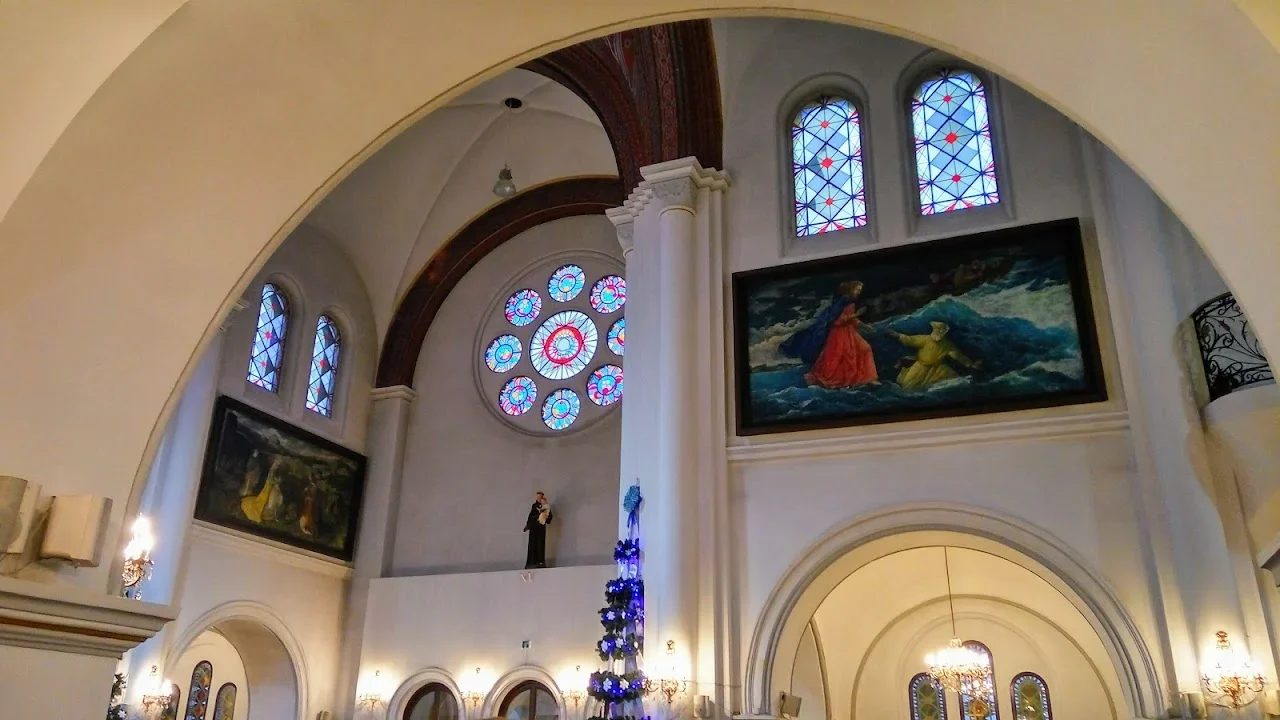
Until 1991, the Simon and Helen Church, or the Red Church, housed the Cinema House of the Union of Cinematographers of the BSSR, and even earlier there were film pavilions and the Republican Centre of Cinematography.
The church was built in the Neo-Romanesque style (1905-1910). Architect Tomasz Pazderski chose this architectural style on purpose. He wanted to show that Catholics and Orthodox Christians exist peacefully in Minsk.
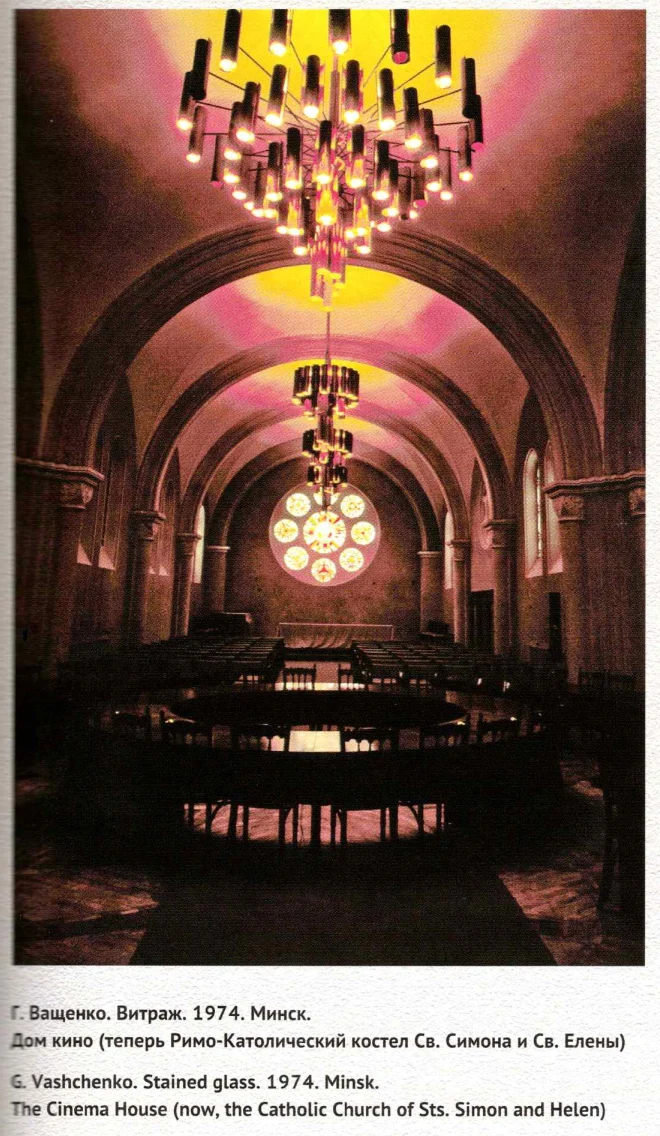
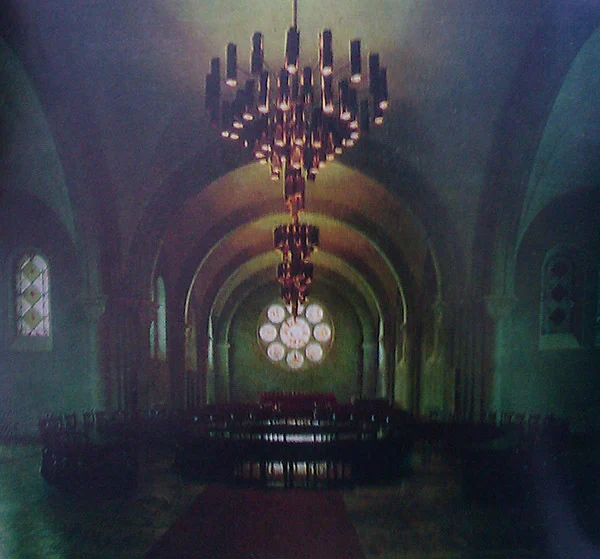
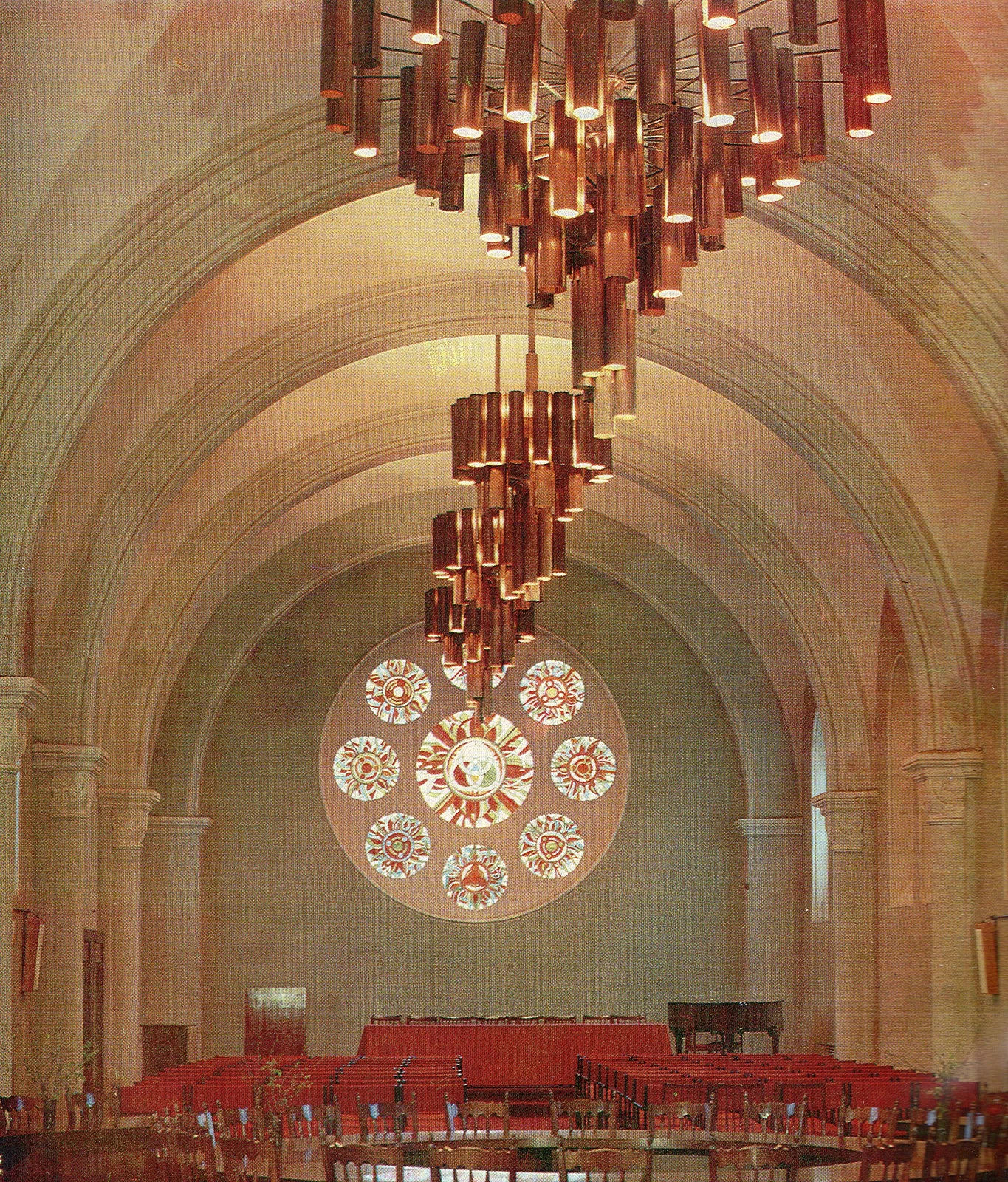
In 1974 the building was reconstructed. Gavriil Vashchenko was invited to decorate the building. When fulfilling the order, the artist assumed that the Cinema House would become a church again and insisted that the hall on the first floor should have a church configuration.
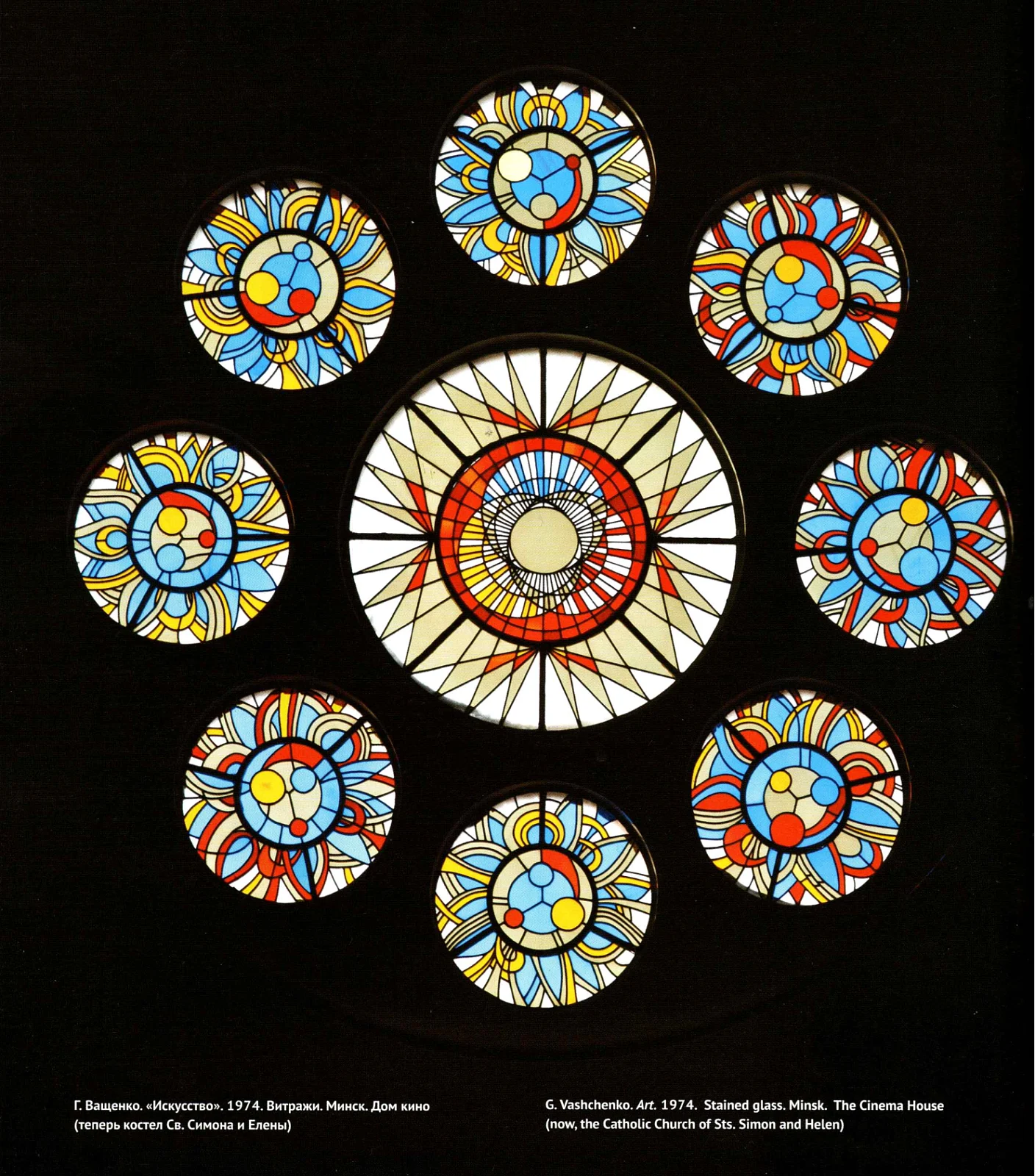
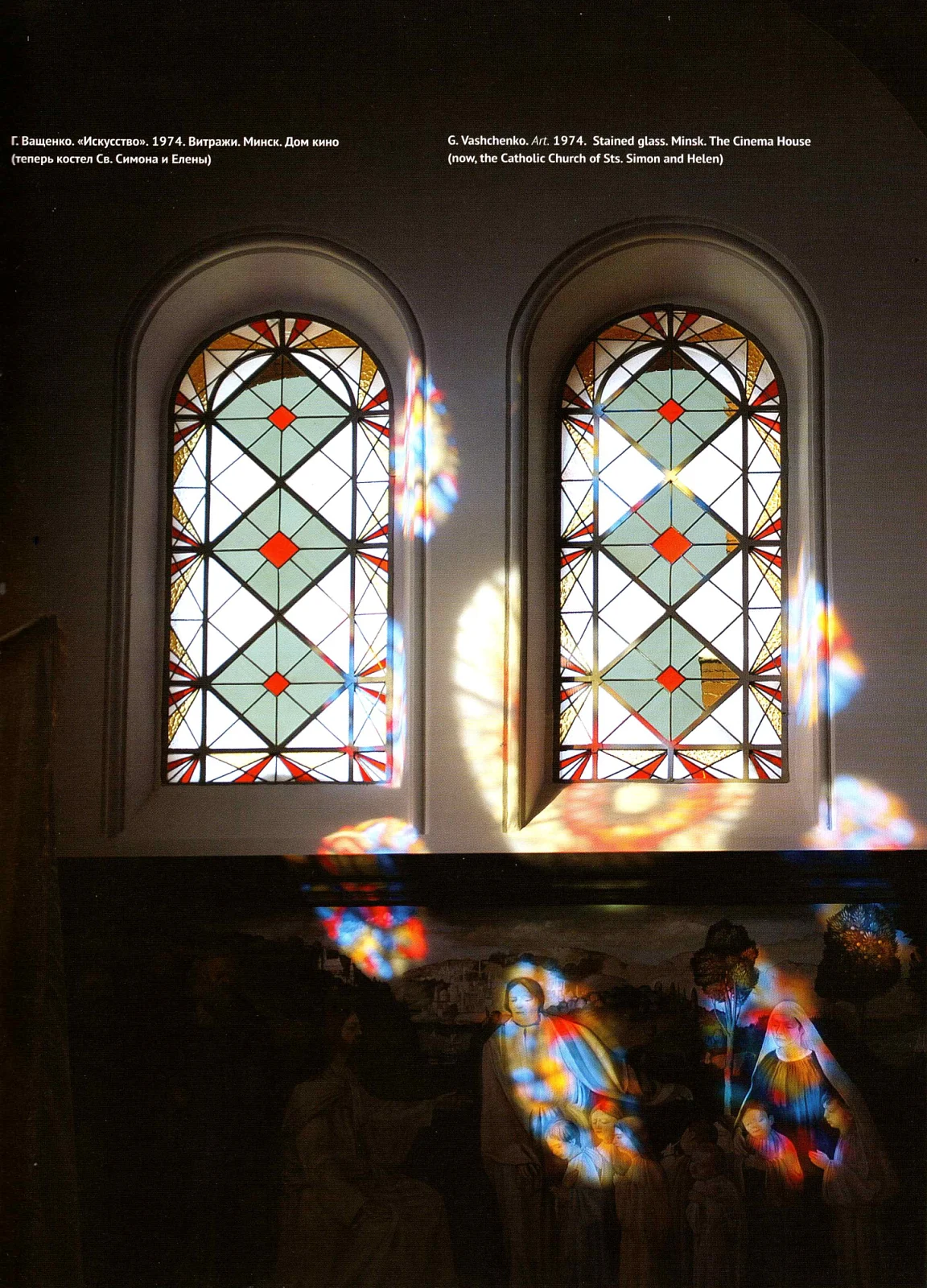
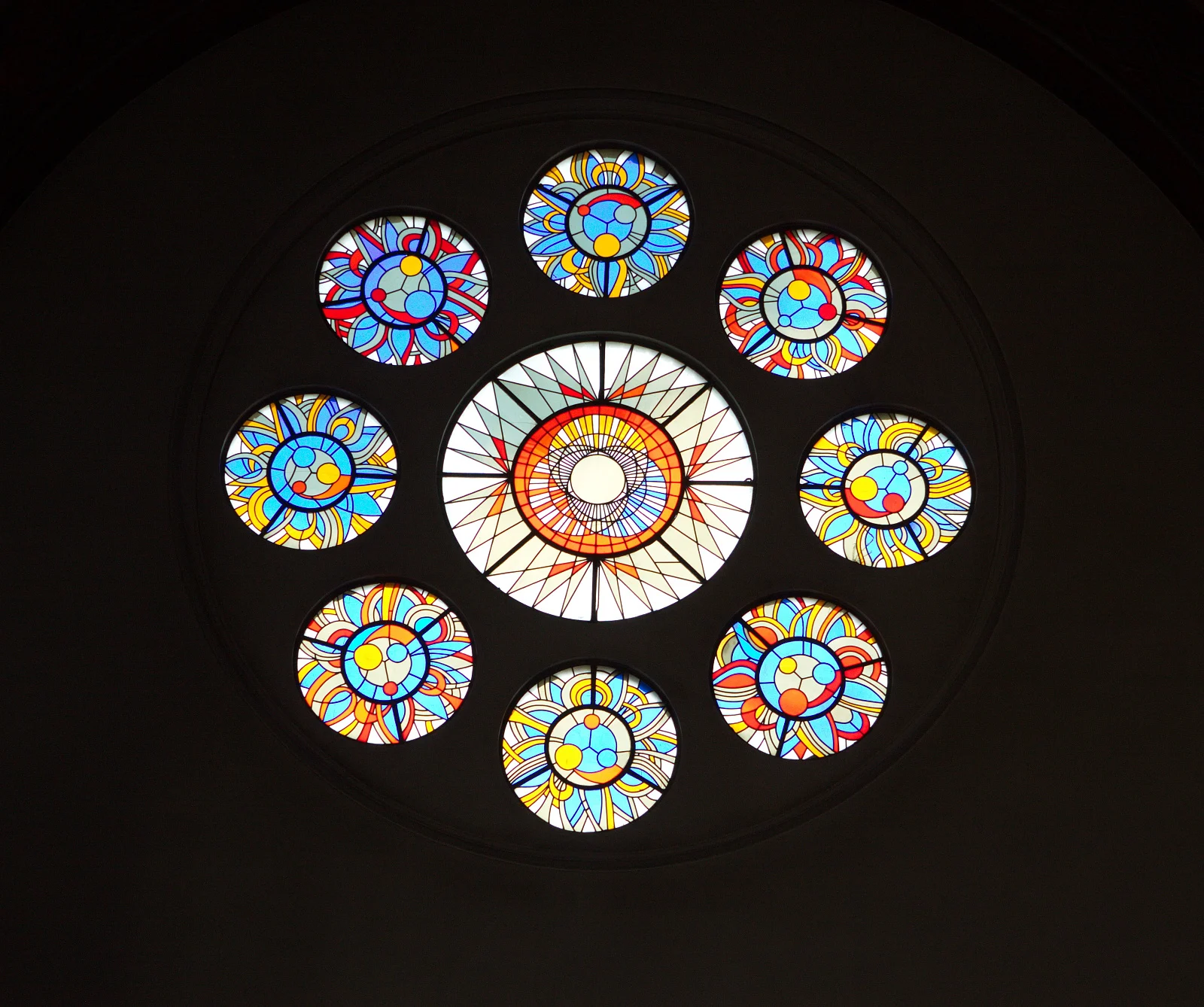
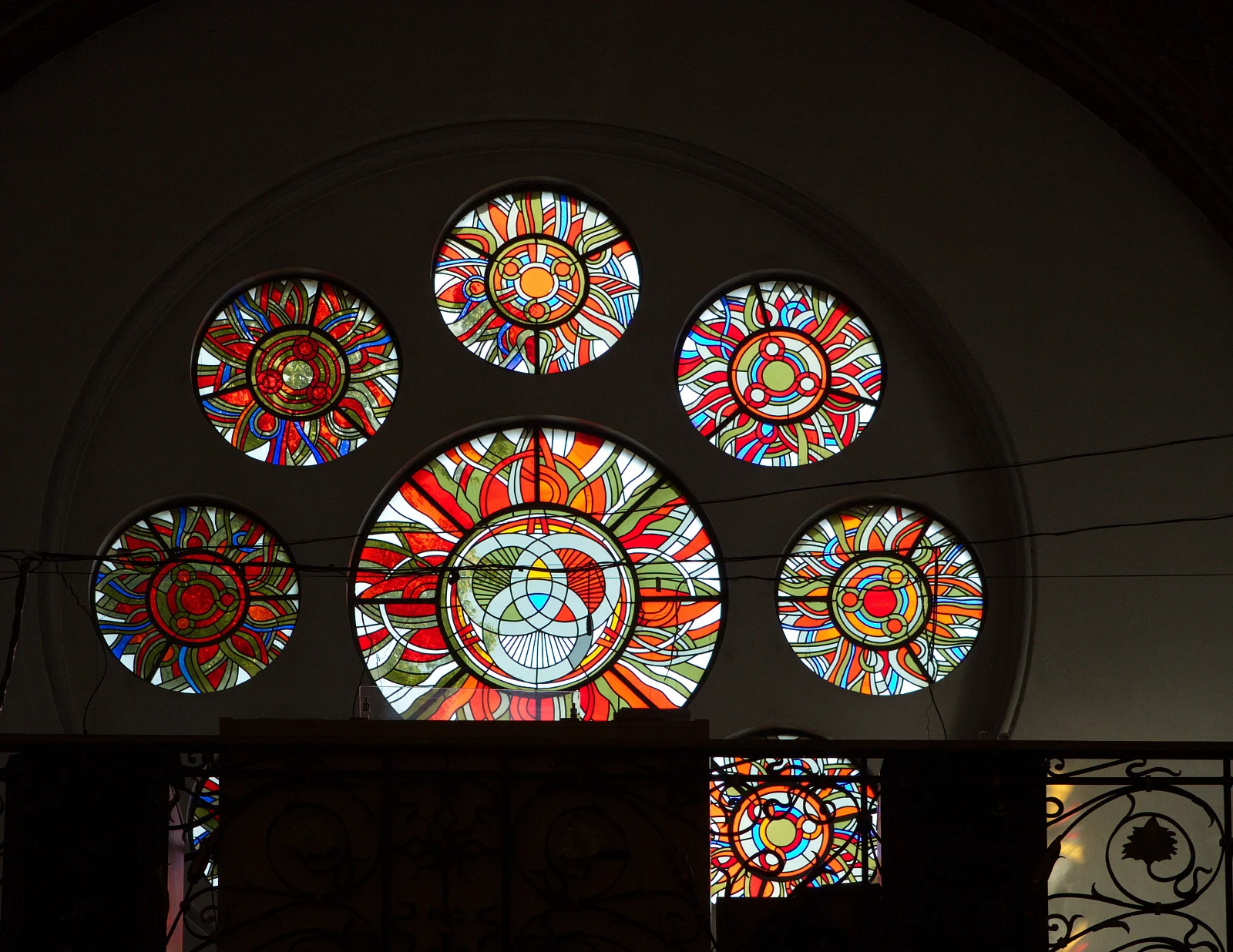
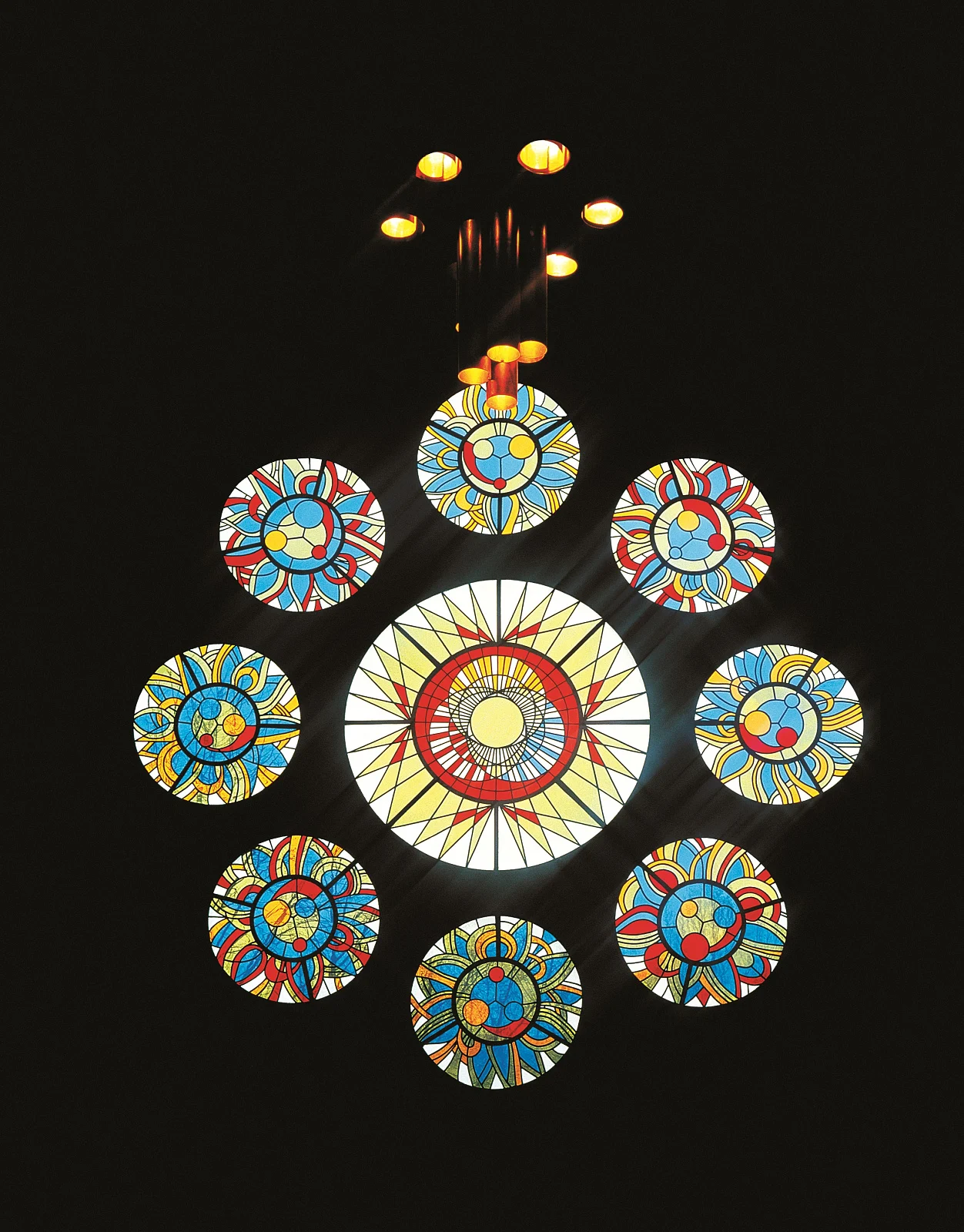
The stained glass windows are made as a rose - a large round window in the architecture of Gothic churches, divided into symmetrical parts. The Gothic rose is related to the wheel of Fortune and signifies the cyclical nature of time.
The pattern is the rays of the cinerary camera in various colour combinations. The largest stained glass window is the festive festival rose. In the centre of the rose are three ribbon rings - three genres of film. In the centre of the small stained glass rose are three circles: red, blue and yellow, superimposed on each other like on a film camera lens. The circles symbolise fiction, documentary and popular science films. Around each rose there are eight ‘companions’.
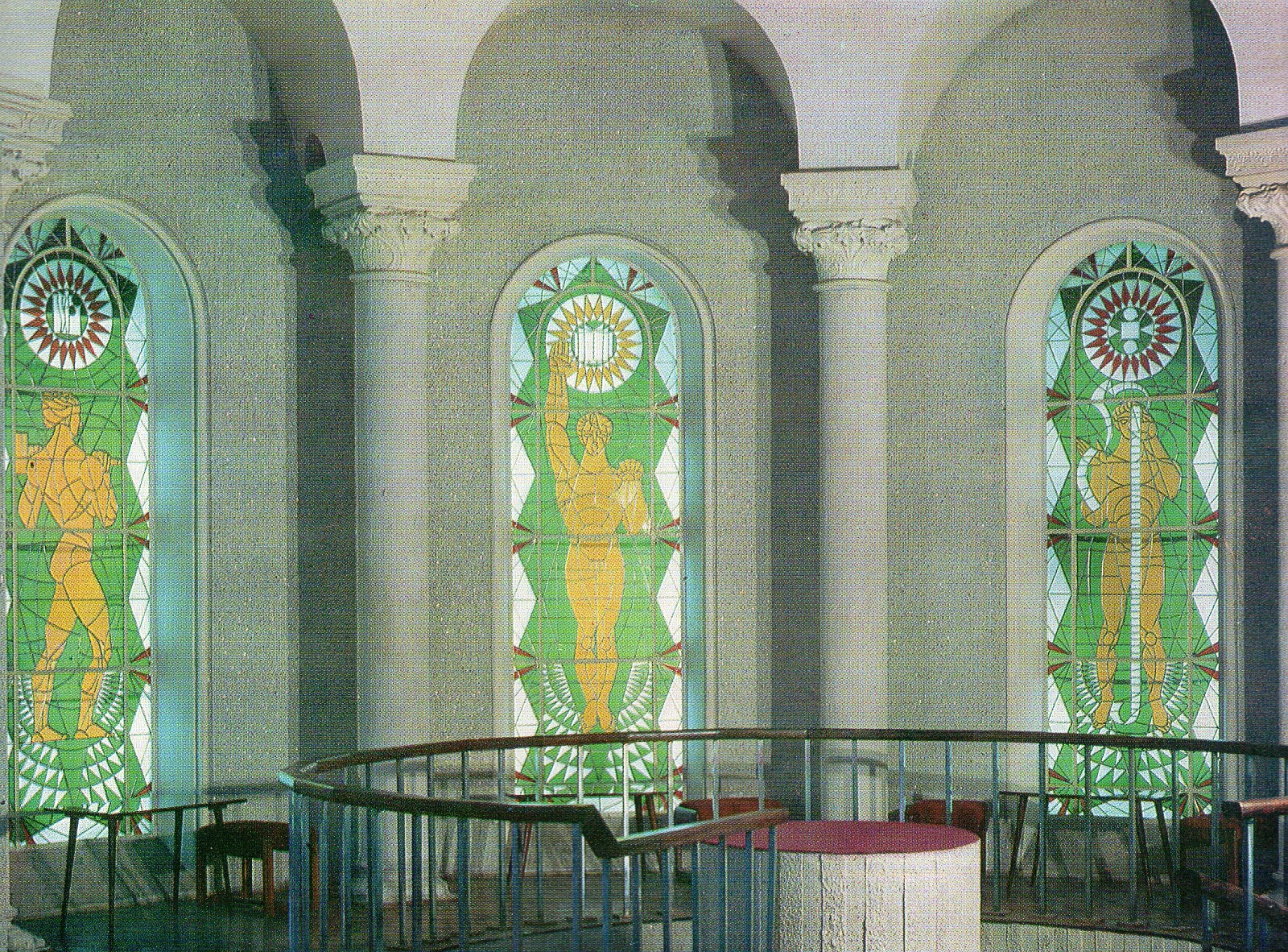
In addition to the stained glass roses, the artist made 5 stained glass windows with figures of Atlanteans: a sculptor, a poet with a book, an operator watching a film, an actor with masks of tragedy and comedy, a composer with a jaleika. The Atlanteans were removed during the re