| Date of Creation: | 1976 |
| Author: | Boris Petrowitsch Miljukow |
| Theme: | Lyrical |
| Technology: | Mosaic |
| Object: | House / Palace of Culture |
| Accessibility: | Available |
| Location: | Baranavichy |
| Coordinates: | 53.1469,26.04151 |
| Condition: | Critically Endangered |
Palace of Culture of the Cotton and Paper Mill
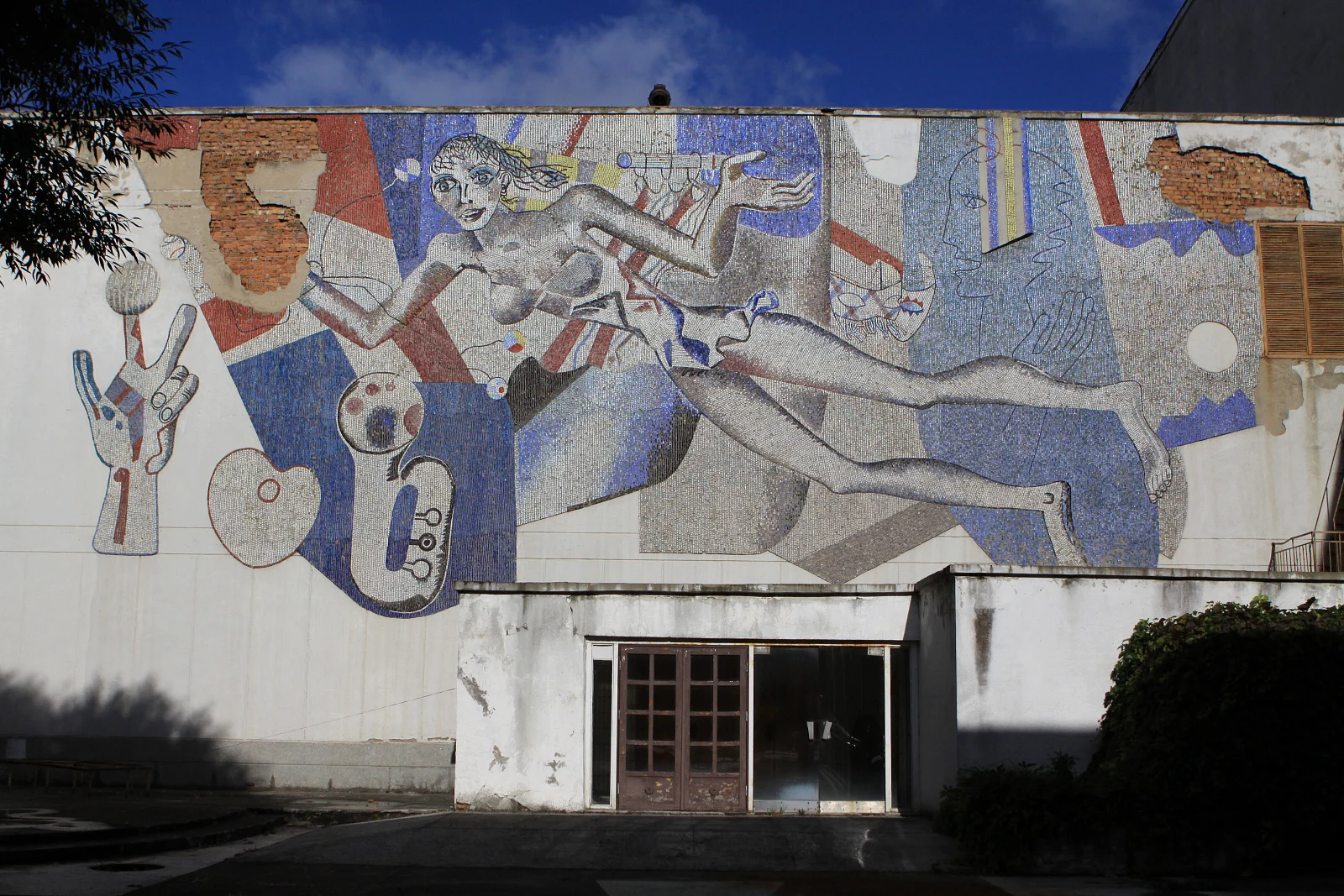
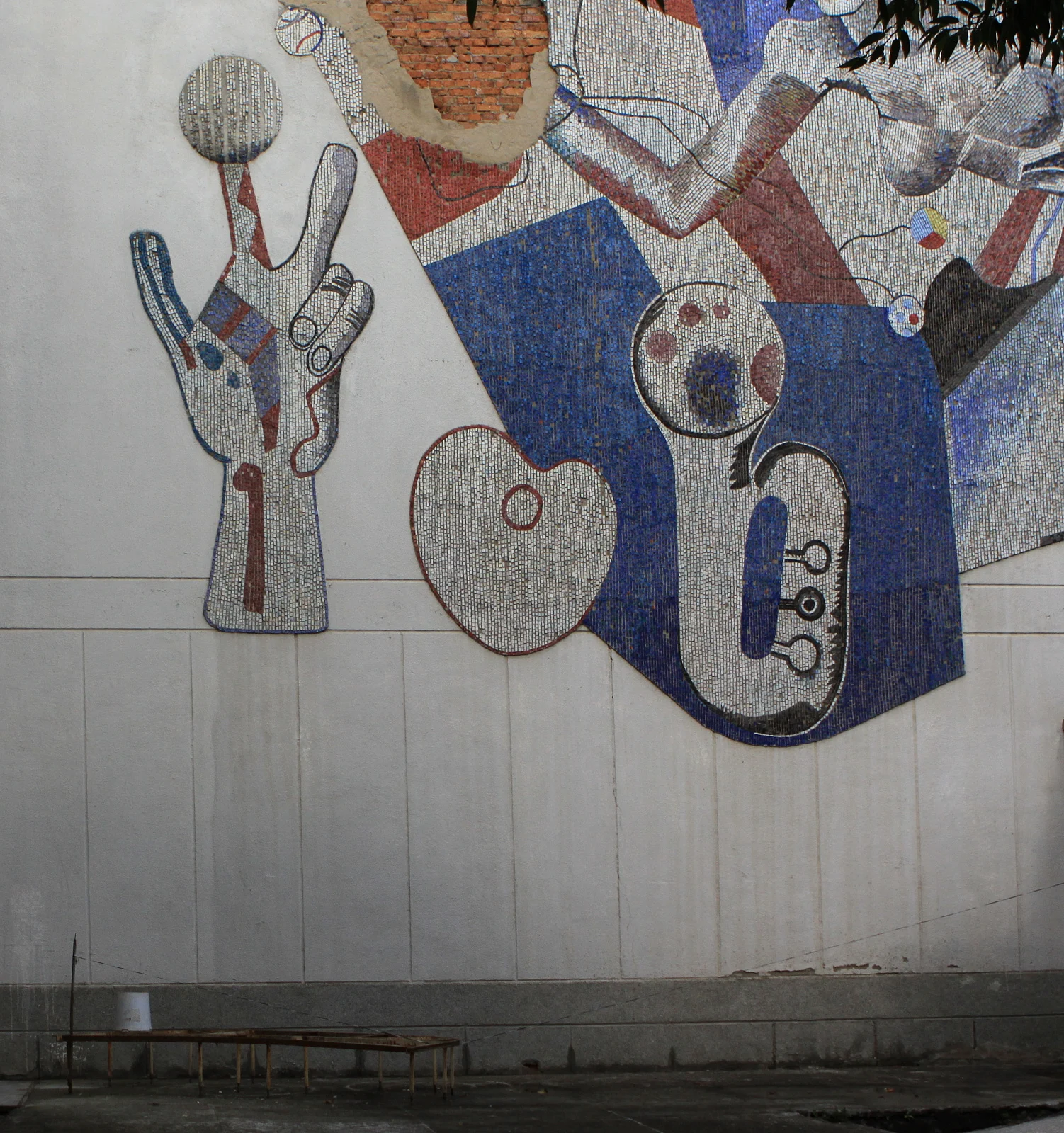
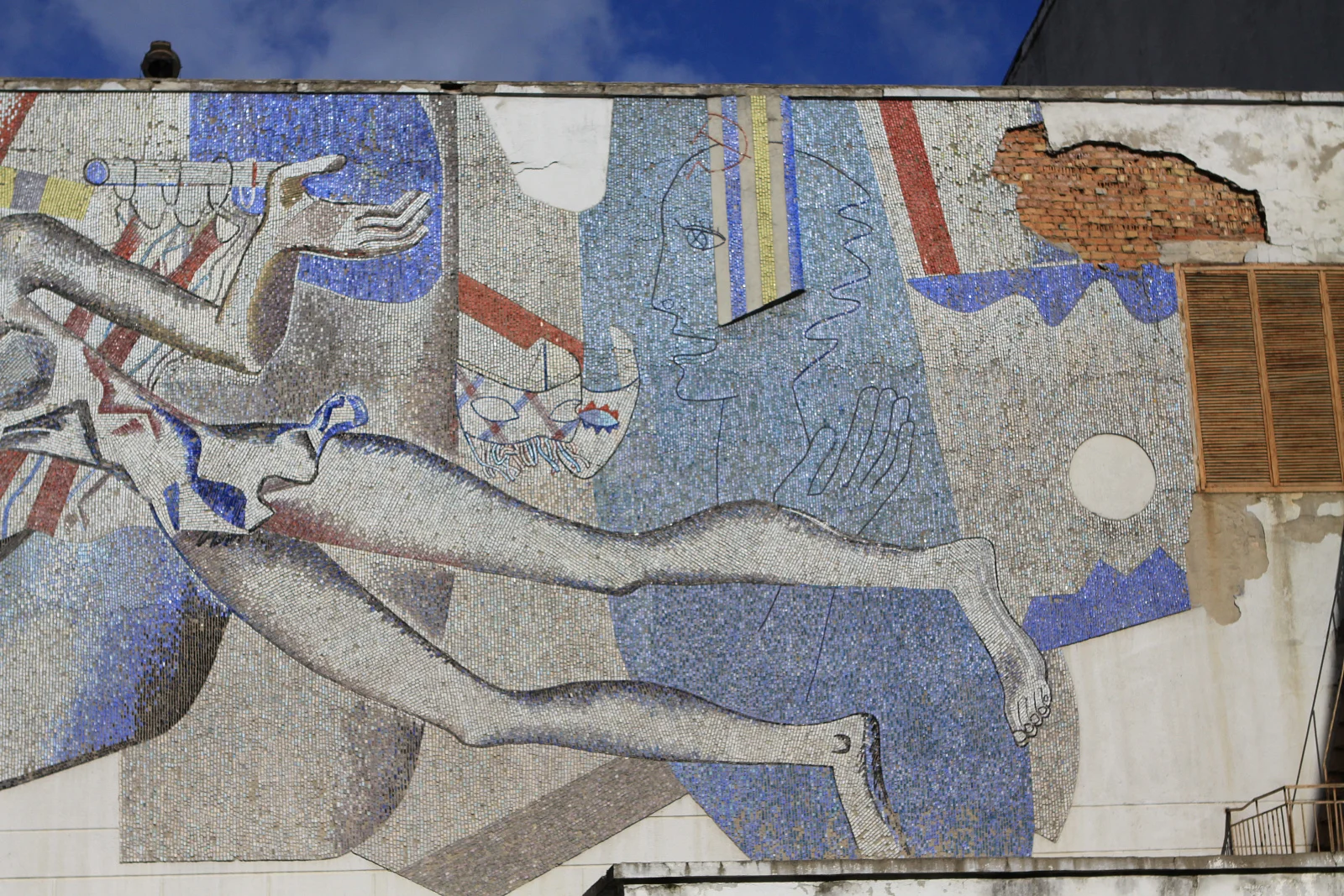
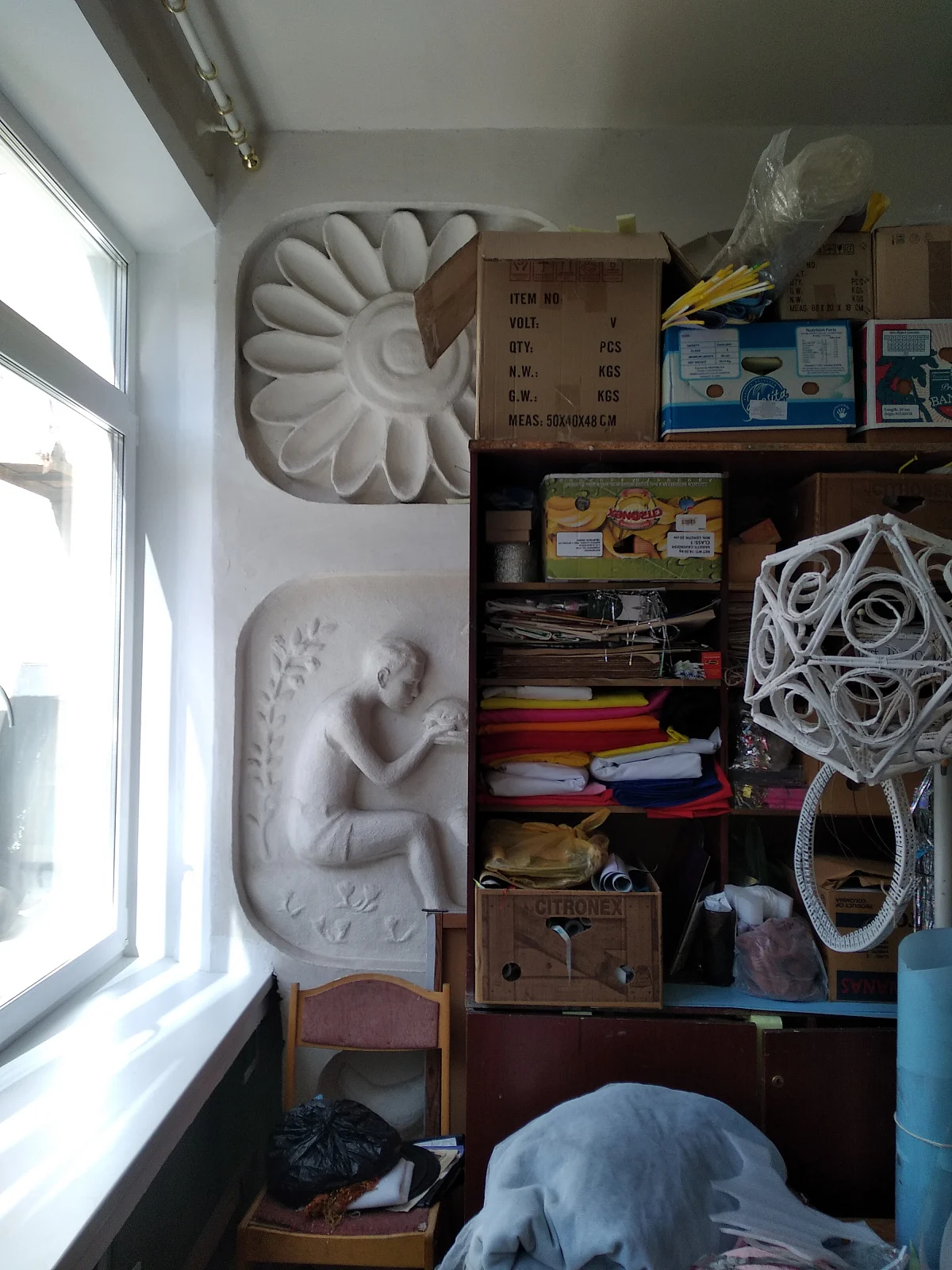
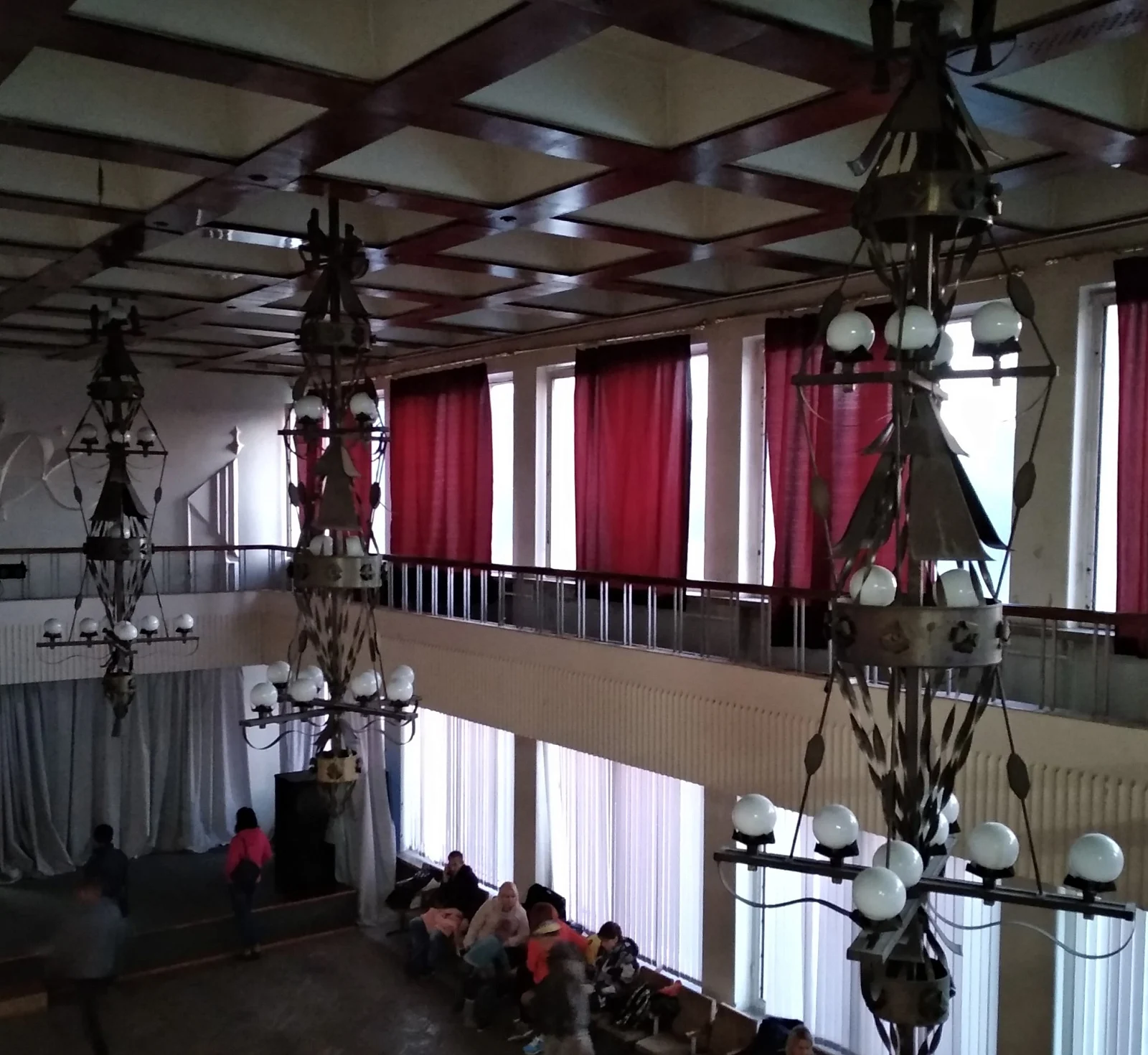
Initially, Belarusian artists were supposed to work on the design project for the Palace of Culture, but in the end, the deadline for the sketch for the project was missed, and the order was given to Moscow. The order for the mosaic was received by the artist Boris Milyukov. Milyukov was considered one of the best students of Alexander Deineka. Behind the author's style, one can see a recognizable composition with a central flying figure. In monumental art, since the mid-1960s, horizontal flight has been especially popular. The image of a flying girl or muse is unlikely to resemble a textile mill worker. Boris Milyukov wrote: "Monumental art is an expensive thing. Designed for a long existence. Perhaps, it is debatable to demand from [monumental] painting the implementation of its ideological and figurative functions in a standard complex." The mosaic is executed, rather, as a general allegory on a theatrical theme: a curtain, a carnival motif and an element constantly cited by artists - a theatrical mask. Mosaics closer to the surrounding reality were made by the artist not far from the city of Baranovichi in the former health resort of the plant on the Gatovo reservoir - "Metallurgy" and "Textile Workers" 1976. The artist has a unique and easily recognizable style, Milyukov's works are similar to each other regardless of the place of execution. Logical generalization, linear compositional design and verified color scheme are repeated in all his monumental panels, for example, in the mosaic "Creation" on the facade of the State Union Design Institute (1971) and the mosaic on the facade of the Palace of Culture of Metallurgists in Temirtau in Kazakhstan (1973).